
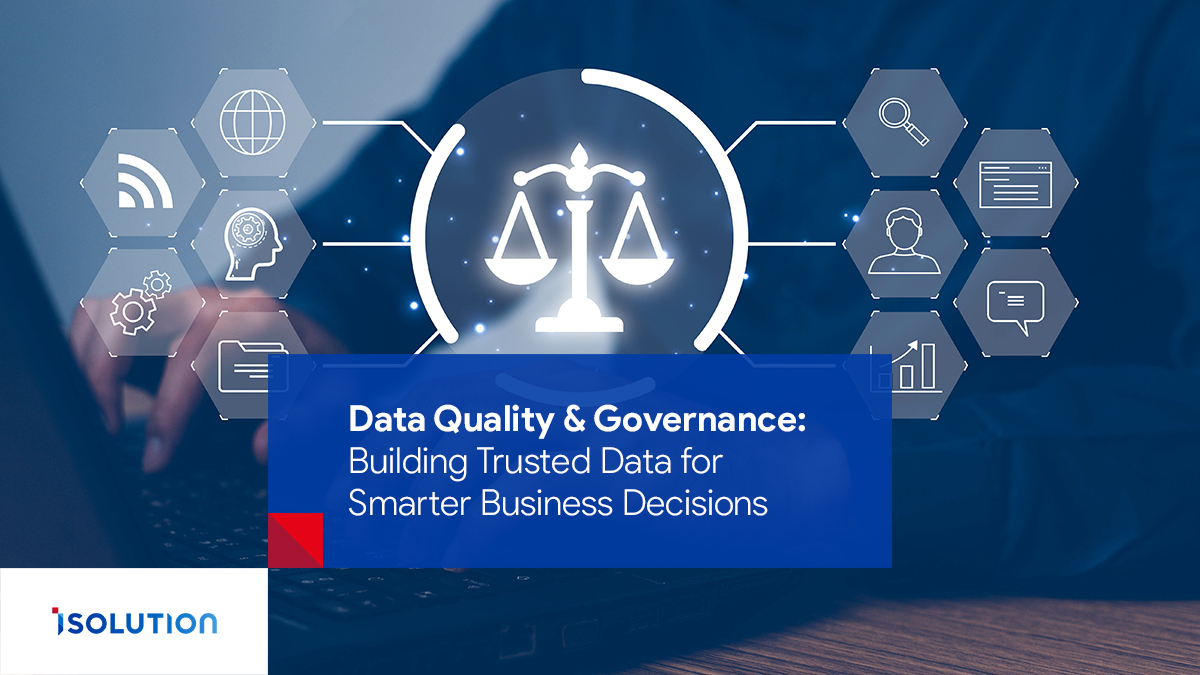
In today’s digital economy, data is one of the most valuable enterprise assets. Organizations rely on data to drive strategic decisions, optimize operations, enhance customer experiences, and maintain regulatory compliance. However, the value of data is only as strong as its quality and the governance framework that controls it. Without proper data quality and governance, businesses face inaccurate reporting, operational inefficiencies, compliance risks, and a loss of trust in analytics and AI initiatives (Gartner, McKinsey).
Understanding Data Quality
Data quality refers to the condition of data based on specific dimensions that determine its reliability and usability. High-quality data enables organizations to make confident, timely, and accurate decisions across all business functions.
Key dimensions of data quality include accuracy, completeness, consistency, timeliness, validity, and uniqueness. Poor data quality often results from siloed systems, manual data entry, lack of validation rules, and unclear data ownership, leading to unreliable analytics and increased operational costs (IBM).
What Is Data Governance?
Data governance is the framework of policies, processes, roles, and technologies that ensure data is managed as a trusted and secure enterprise asset throughout its lifecycle. It defines how data is created, accessed, shared, and maintained across the organization.
Core Components of an Effective Data Governance Framework
Data Ownership & Stewardship
Clear accountability ensures that data is managed consistently and responsibly. Data owners define rules and standards, while data stewards enforce and monitor data quality across systems.
Policies & Standards
Standardized definitions, naming conventions, validation rules, and classification policies improve consistency and reduce ambiguity across departments and platforms.
Data Quality Management
Continuous data profiling, monitoring, cleansing, and enrichment help identify and resolve issues before they impact reporting or decision-making (IBM).
Metadata Management
Metadata provides context by documenting data definitions, lineage, and usage, enabling better transparency, trust, and discoverability (Gartner).
Security & Compliance
Strong governance frameworks support data privacy, access control, and compliance with regulations such as GDPR and industry standards (McKinsey).
Technology Enablement
Modern data platforms, APIs, and automation tools enable scalable governance and real-time data.
Why Data Quality & Governance Matter More Than Ever
As organizations increasingly adopt cloud computing, AI, machine learning, and advanced analytics, their reliance on accurate and trusted data grows. Analytics and AI models built on poor-quality data lead to unreliable insights and flawed business decisions (McKinsey).
Data Governance in the Era of Cloud & AI
With the rise of hybrid and multi-cloud architectures, data is more distributed than ever. Governance models must evolve to support cross-platform data integration, real-time validation, API-driven data exchange, and automated quality controls (IBM).
Best Practices for Implementing Data Quality & Governance
Successful data governance initiatives start with clear business objectives rather than purely technical goals. Assigning ownership, standardizing critical data elements, automating quality checks, and continuously monitoring performance are essential steps. Equally important is fostering a data-driven culture where teams understand the value of data quality and actively participate in governance efforts (Gartner).
Conclusion
Data quality and governance are no longer optional,they are essential foundations for digital transformation, analytics excellence, and AI readiness. Organizations that invest in structured governance frameworks and continuous data quality improvement gain a competitive advantage through trusted insights and confident decision-making (Gartner).
References
- Gartner: Data Governance: The Foundation of Digital Business
- IBM: What Is Data Governance?
- McKinsey & Company: Why Data Quality Matters for Advanced Analytics






Leave a Comment